How to Choose a Robot Vacuum: A Simple Buying Guide
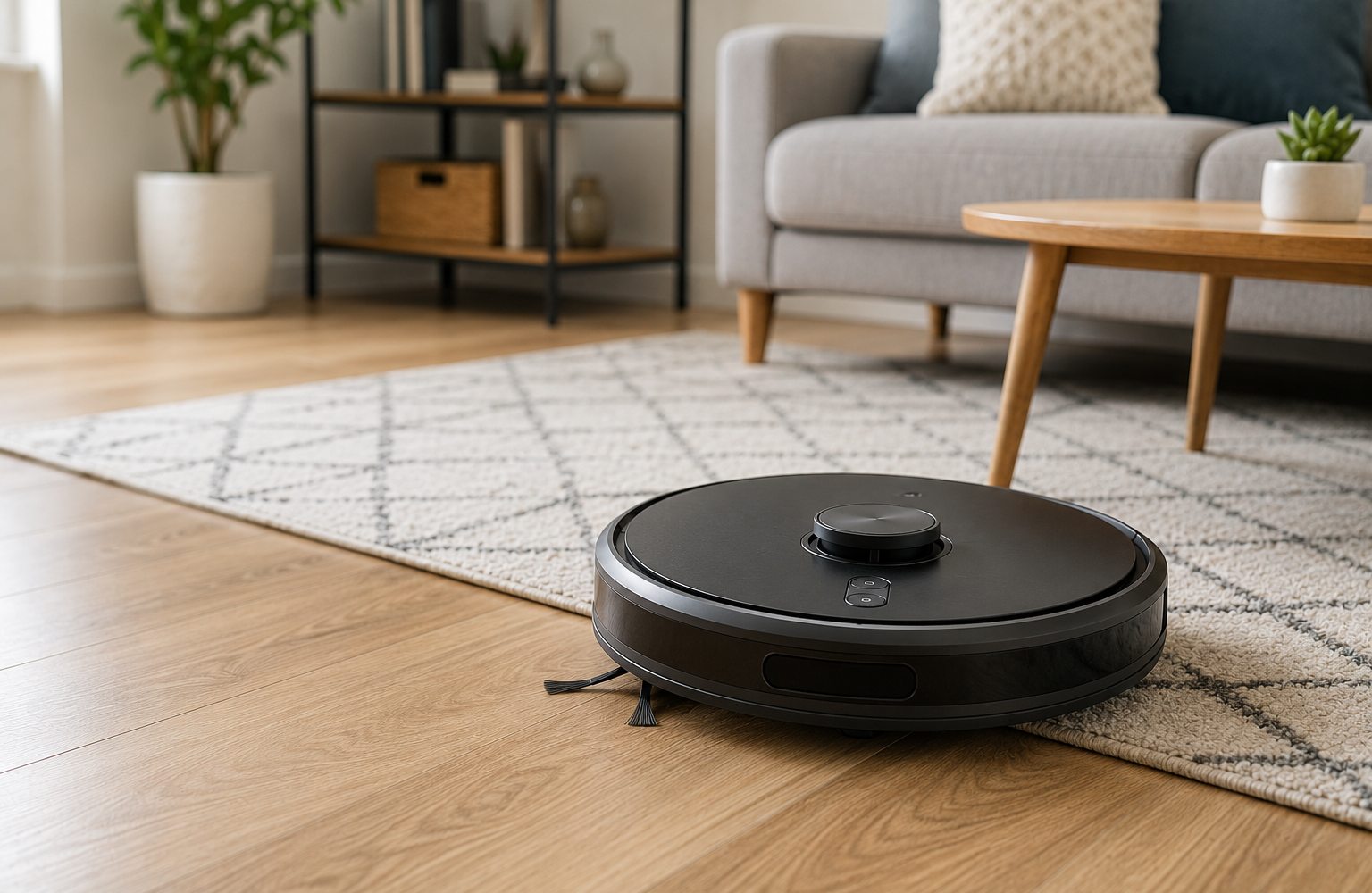
Learning how to choose a robot vacuum starts with understanding what you actually expect it to do. Robot vacuums can handle regular floor maintenance with very little effort, but they vary significantly in cleaning performance, navigation, obstacle avoidance, mapping, maintenance, and price.
A small apartment with mostly hard floors may need a very different robot vacuum from a larger home with carpets, pets, multiple rooms, and stairs.
Robot vacuums are also not the only option for convenient everyday cleaning. If you prefer more control and stronger manual cleaning, read our How to Choose a Cordless Vacuum: A Simple Buying Guide to learn what matters when comparing cordless models.
The goal is not to buy the robot vacuum with the longest feature list. It is to find one that fits your home and removes enough routine cleaning from your schedule to be worthwhile.
1. How to Choose a Robot Vacuum for Your Flooring
When deciding how to choose a robot vacuum, start with your flooring.
Robot vacuums can be useful for collecting everyday debris from hard surfaces such as hardwood, laminate, and tile. Carpet can present a different challenge, particularly when dirt or pet hair becomes embedded in the fibres.
If your home has mostly hard floors, prioritize good debris pickup, navigation, and edge cleaning.
If you have significant carpeting, pay closer attention to carpet performance and whether the robot can increase its cleaning power when needed.
For mixed flooring, check whether the robot can transition reliably between surfaces and over the thresholds in your home.
2. Pay Attention to Navigation and Mapping
A robot vacuum cannot clean effectively if it cannot navigate your home properly.
Basic models may use relatively simple navigation systems. More advanced robots can create maps of your home and clean rooms systematically.
Mapping can allow you to:
- Select individual rooms
- Create cleaning schedules
- Set restricted areas
- Create cleaning zones
- Send the robot to a particular area
- Track where it has already cleaned
For a small open apartment, sophisticated mapping may not be essential.
For a larger home with several rooms, reliable mapping can make the robot considerably more useful.
Independent testing also looks closely at navigation. Consumer Reports, for example, tests robot vacuums in a multiroom environment containing obstacles such as cords, carpet fringe, furniture, and debris.
3. Consider Obstacle Avoidance
Homes are rarely completely clear.
Shoes, charging cables, toys, pet bowls, furniture legs, and other objects can interfere with a robot vacuum.
Some models use cameras, lasers, sensors, or combinations of technologies to detect and navigate around obstacles.
Good obstacle avoidance can reduce the amount of preparation required before starting a cleaning cycle.
However, you should not assume that a robot vacuum can recognize everything. Keeping cables, clothing, small toys, and other problematic objects off the floor can still make cleaning more reliable.
If your floors frequently have objects on them, obstacle avoidance should rank higher on your priority list.
4. Look Beyond the Suction Number
Robot vacuum manufacturers often advertise suction using numbers measured in pascals, commonly abbreviated as Pa.
A larger number can sound impressive, but suction specifications alone do not tell you how well a robot will clean your particular floors.
Cleaning performance can also depend on:
- Brush design
- Airflow
- Floor type
- Navigation
- Cleaning pattern
- Edge brushes
- Carpet detection
Treat suction as one piece of information rather than the entire buying decision.
When possible, look at independent cleaning tests that evaluate actual performance on different surfaces and types of debris.
5. Think About Pet Hair
Pet owners have additional things to consider.
Hair can wrap around brush rolls, accumulate quickly in small dustbins, and become difficult for some robots to remove from carpets.
If you have pets, consider:
- Pet hair pickup
- Brush roll design
- Hair tangling
- Dustbin capacity
- Carpet performance
- Filtration
- Obstacle avoidance
Independent testing shows why this matters. Some robot vacuums collect embedded pet hair effectively while others can drag hair around or leave it tangled around the brush roll.
A self-emptying dock can also become more useful in a home where pet hair fills the robot’s dustbin frequently.
Do not rely only on labels such as “pet vacuum.” Look at the actual features and cleaning performance.
6. Decide Whether You Need a Self-Emptying Dock
Standard robot vacuums store debris inside a small onboard dustbin.
That bin needs to be emptied periodically.
A self-emptying model returns to its dock, where collected debris is transferred into a larger container or bag.
This can reduce how frequently you need to interact with the vacuum.
There are tradeoffs.
Self-emptying docks are generally larger, increase the purchase price, and may require replacement bags or additional maintenance.
If your priority is keeping the system simple and affordable, manual emptying may be perfectly acceptable.
If your priority is reducing routine maintenance, a self-emptying dock can be genuinely useful.
7. Decide Whether You Need Mopping
Many robot vacuums now include mopping capabilities.
That does not automatically mean you need them.
A vacuum and mop combination may make sense if your home contains significant hard flooring and you want one machine to handle both types of routine maintenance.
However, mopping performance can vary considerably between machines. Consumer Reports’ testing of robot vacuum and mop combinations has found meaningful differences in their ability to remove dried stains and handle other cleaning tasks.
Some models simply use a damp pad. More advanced machines may use rotating or vibrating mop pads and docks that wash or dry them automatically.
Before paying extra for mopping, ask yourself whether you will actually use the feature.
If vacuuming is your main priority, a strong vacuum-only model may provide better value.
8. Consider Battery Life and Home Size
Battery runtime works differently for a robot vacuum than it does for a cordless stick vacuum.
Many robot vacuums can return to their charging station when the battery becomes low. Some can recharge and then continue an unfinished cleaning job.
For a small apartment, maximum battery runtime may not matter very much.
For a larger home, look for:
- Adequate runtime
- Automatic recharging
- Resume cleaning
- Reliable mapping
A robot that can reliably recharge and continue where it stopped may be more useful than simply choosing the model with the largest advertised battery number.
9. Look at Edge and Corner Cleaning
The round shape used by many robot vacuums creates an obvious challenge: corners.
Manufacturers often use side brushes or other mechanisms to move debris away from walls and toward the main cleaning system.
Performance can still vary between models.
If your home regularly collects dust and crumbs around baseboards, kitchen cabinets, or room edges, pay attention to independent edge-cleaning tests.
A robot that cleans the centre of a room well but consistently leaves debris along the walls may still require frequent manual cleaning.
10. Consider the App and Smart Features
Many robot vacuums connect to a smartphone app.
Depending on the model, the app may allow you to:
- Start or stop cleaning
- Schedule cleaning
- Select individual rooms
- Create restricted areas
- Adjust cleaning power
- View maps
- Monitor cleaning progress
- Change dock settings
These features can make a robot vacuum more convenient, but you do not necessarily need every smart function available.
Focus on features that improve how you will actually use the machine.
If you simply want your robot to clean the floors every morning, a complicated app filled with advanced controls may provide little additional value.
11. Think About Privacy and Data
Smart robot vacuums may collect information about your home through mapping systems, sensors, cameras, and connected apps.
That makes privacy worth considering alongside cleaning performance.
Before buying a connected robot vacuum, consider:
- What information the device collects
- Whether the model uses cameras
- What permissions the app requests
- The manufacturer’s privacy policy
- Available privacy controls
- Whether you need every connected feature
Consumer Reports includes data privacy and security in its testing of connected robot vacuums, alongside physical cleaning and navigation tests.
A robot vacuum may be an internet-connected device operating throughout your home, so privacy should not be ignored when comparing models.
12. Consider Maintenance
Robot vacuums reduce manual floor cleaning, but they are not maintenance-free.
Depending on the model, you may still need to:
- Empty the dustbin
- Remove hair from brushes
- Clean sensors
- Replace filters
- Replace side brushes
- Clean wheels
- Maintain the charging dock
- Replace self-emptying bags
- Clean mop pads on combination models
Premium docks may automate several of these tasks, but they can also introduce additional components that need maintenance.
Before buying, check the manufacturer’s recommended maintenance schedule and whether common replacement parts are readily available.
13. Measure Before You Buy
Robot vacuums need to travel underneath and around furniture.
Check the height of the robot and compare it with the clearance beneath beds, sofas, cabinets, and other furniture you expect it to clean under.
Also consider the charging dock.
Self-emptying and multifunction docks can be considerably larger than basic charging stations.
Think about where the dock will permanently sit and whether the robot has enough space to enter and leave it reliably.
A robot vacuum should fit naturally into your home rather than creating a new storage problem.
14. Compare Value Instead of Features
When learning how to choose a robot vacuum, it is easy to assume that the model with the most technology must be the best.
That is not necessarily true.
A premium robot might include advanced obstacle recognition, mopping, automatic dust emptying, mop washing, drying, water management, cameras, and dozens of app settings.
Those features can be valuable, but only if they solve problems you actually have.
A smaller apartment with hard flooring may need nothing more than reliable navigation and good debris pickup.
A larger home with pets and mixed flooring may benefit from stronger cleaning performance, better mapping, obstacle avoidance, and a self-emptying dock.
Pay for useful automation, not features you will never use.
Robot Vacuum Buying Checklist
Before buying, ask yourself:
What flooring do I have?
Do I need strong carpet performance?
Do I have pets?
How important is obstacle avoidance?
Do I need room mapping?
Do I want a self-emptying dock?
Will I actually use mopping?
Can the robot recharge and resume cleaning?
How well does it clean edges?
Will it fit underneath my furniture?
Where will I place the charging dock?
What maintenance does it require?
Are replacement brushes, filters, batteries, and bags available?
Am I comfortable with its app and privacy practices?
Answering these questions can narrow your options considerably.
The Home Utility Take
Ultimately, how to choose a robot vacuum comes down to deciding which cleaning tasks you actually want to automate.
Start with your flooring, home size, pets, and the amount of clutter the robot is likely to encounter.
Then compare navigation, cleaning performance, obstacle avoidance, maintenance, and whether features such as mopping or self-emptying genuinely benefit your household.
A robot vacuum is best viewed as a tool for maintaining your floors regularly. Depending on your home, you may still want another vacuum for stairs, furniture, difficult areas, and deeper cleaning.
The best robot vacuum is not necessarily the smartest or most expensive one.
It is the one that reliably removes a cleaning job from your routine.
Related Reading
For additional independent research, see How Consumer Reports Tests Vacuums. Their robot vacuum testing evaluates navigation in a multiroom environment, cleaning performance, pet hair, handling, privacy, and security.
For homes with pets, their 2026 robot vacuum pet hair testing also provides useful comparisons based on laboratory testing.