How to Organize a Small Pantry: Practical Ideas That Actually Save Space
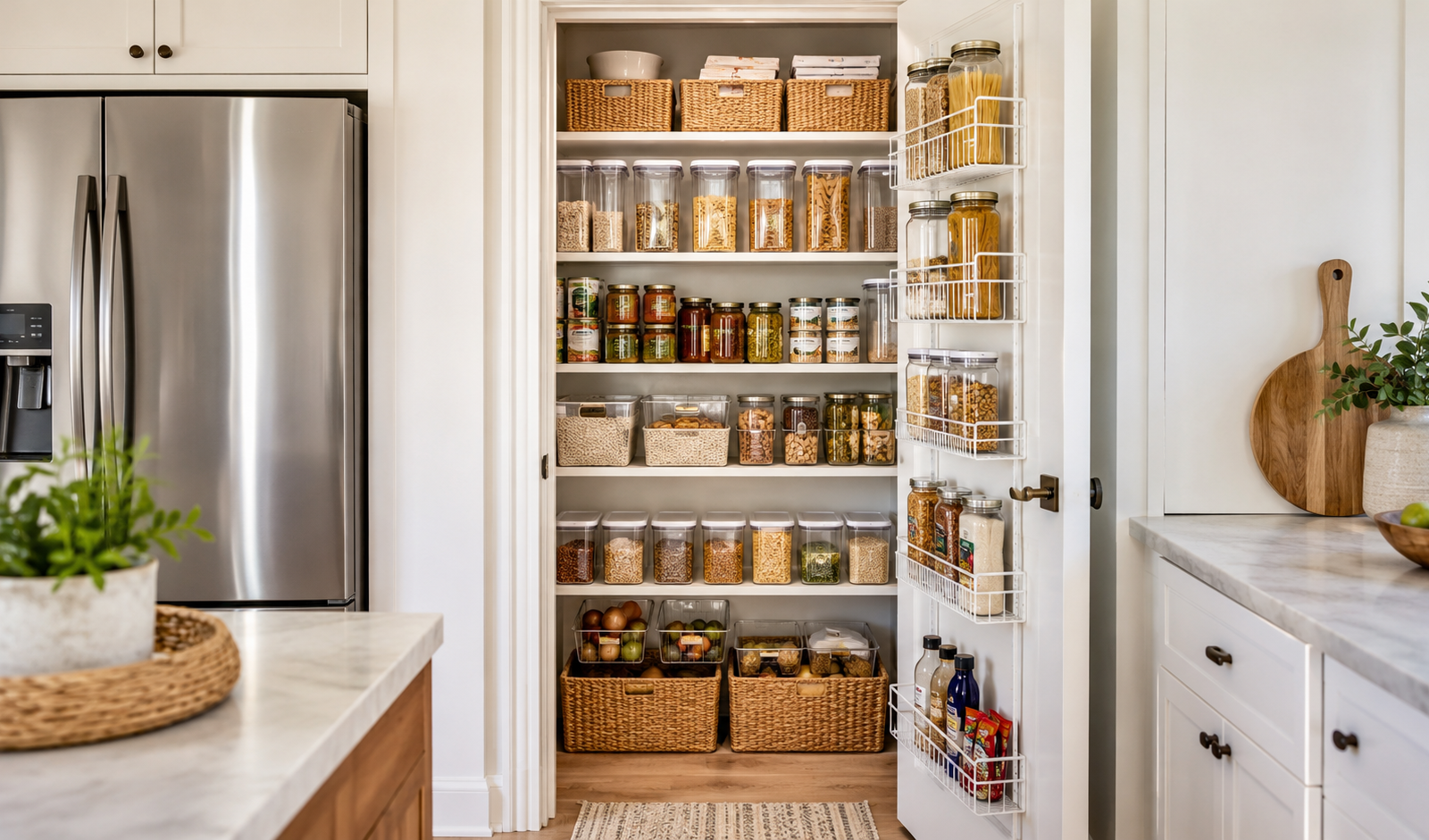
A small pantry can become messy faster than you expect. Deep shelves hide food, narrow spaces are awkward to use, and everyday items often get pushed wherever there is room.
The good news is that learning how to organize a small pantry does not require expensive containers or a full kitchen makeover. The biggest improvements usually come from making items easier to see, grouping similar foods together, and using the space in a simple way that is easy to maintain.
Here are practical ideas that can make a small pantry feel more useful without making it complicated.
Start by Emptying Everything
Before you organize the pantry, take everything out.
This gives you a clear view of the shelves and helps you see what is actually taking up space. It is also a good time to check expiration dates and remove anything you no longer use.
As you go, group food into broad categories such as:
- canned foods
- pasta and grains
- breakfast foods
- snacks
- baking ingredients
- sauces and condiments
- drinks
- backup items
You do not need a perfect system yet. The goal is simply to understand what you have before putting it back.
Give Similar Foods the Same Home
One of the easiest ways to keep a small pantry organized is to group similar items together.
For example:
Breakfast area: cereal, oats, coffee and spreads
Cooking area: rice, pasta, canned foods and sauces
Snack area: crackers, chips and snack bars
Baking area: flour, sugar and other baking ingredients
This makes it easier to find what you need and helps you notice when you already have something before buying more.
Keep the categories broad. If the system becomes too detailed, it can become harder to maintain.
Keep Everyday Items Easy to Reach
The foods you use the most should be the easiest to grab.
Try keeping everyday items around eye level or on the shelves that are most comfortable to reach.
A simple setup could be:
- breakfast foods and snacks at eye level
- cooking ingredients just below
- backup supplies on higher shelves
- heavier items on lower shelves
This small change can make the pantry much easier to use every day.
How to Organize a Small Pantry With Deep Shelves
Deep shelves can hold a lot, but they can also hide food in the back.
Try placing taller items behind shorter items so everything stays visible.
Shelf risers can also help because they create a second level for cans, jars, or smaller containers.
For loose groups of food, shallow bins or baskets can work well. Instead of reaching behind several products, you can pull the whole group forward.
The main thing to avoid is filling deep shelves from front to back with unrelated items. That usually creates clutter you cannot see.
Use Vertical Space Carefully
Small pantries often have unused space above shorter items.
That space can sometimes be used with:
- shelf risers
- stackable bins
- small drawers
- under-shelf baskets
But more storage is not always better.
If stacking items makes them harder to reach, it is not really helping. Use vertical space only when it makes the pantry easier to use.
How to Organize a Small Pantry Closet
A small pantry closet usually has several shelves but not much width.
In this type of pantry, smaller categories often work better than large storage containers.
Try to keep each section clear and use the full height of the shelves.
If the door has enough space, door storage can also be useful for lighter items such as:
- small snacks
- spice packets
- wraps and bags
- lightweight bottles
Just make sure the door can still close properly after adding storage.
How to Organize a Small Pantry Cabinet
If your pantry is really a cabinet, every shelf should have a clear purpose.
A simple layout could be:
Top shelf: backup food and less-used items
Middle shelf: everyday cooking ingredients
Lower shelf: breakfast foods and snacks
If the shelves can be adjusted, move them closer together when you are storing shorter items. Large gaps between shelves can waste a lot of space in a small cabinet.
How to Organize a Small Pantry With Wire Shelves
Wire shelves can be awkward because small items may tip over or fall through the gaps.
Bins and baskets can help create a more stable surface.
Shelf liners can also make wire shelves easier to use for:
- jars
- bottles
- small packages
- narrow containers
The goal is simple: keep items stable, visible, and easy to remove.
Use Clear Containers Only When They Help
Clear containers can look great, but you do not need to move everything into matching containers.
They are most useful for foods that come in bags or bulky packaging, such as:
- rice
- flour
- cereal
- oats
- pasta
They make it easier to see how much food is left and can reduce messy packaging.
But transferring every snack or ingredient into a container can create extra work.
Use containers because they solve a problem, not just because they look organized.
Use Bins for Small or Loose Items
Small packages are one of the easiest ways for a pantry to become messy.
Bins are helpful for grouping things like:
- snack bars
- seasoning packets
- baking supplies
- drink mixes
- small bags
Instead of stacking these items one by one, keep them together in one bin that you can easily pull out.
This is especially useful in a tiny pantry or narrow pantry, where every bit of space matters.
Do Not Overfill the Pantry
A pantry does not need to be packed completely full.
Leaving a little open space makes it easier to see what you have, move things around, and put groceries away.
If every shelf is crowded, check for duplicate items or foods you rarely use.
The goal is not to fit as much as possible.
The goal is to make the pantry easy to use.
Keep Backup Items Separate
If you buy extra canned goods, pasta, sauces, or other staples, keep them together in one place.
You can use:
- a top shelf
- one storage bin
- a separate pantry section
When the main item runs out, move the backup forward.
This keeps your everyday shelves from becoming crowded and makes it easier to see what you actually need to buy.
Keep Labels Simple
Labels can be useful, but they do not need to be detailed.
Simple labels like:
- Snacks
- Breakfast
- Baking
- Pasta
- Cans
are usually enough.
A simple system is easier to maintain than a complicated one.
Put Older Food in Front
When you bring home new groceries, place newer items behind older ones when possible.
This helps you use older food first and can reduce waste.
It works especially well for:
- canned foods
- sauces
- cereal
- snacks
- packaged foods
You do not need a perfect inventory system. Just make older items easier to see and reach.
Check the Pantry Before Grocery Shopping
Before you go shopping, take a quick look at what you already have.
This helps prevent duplicate purchases and makes it easier to buy only what you need.
When similar foods are stored together, this takes only a few minutes.
Small Pantry Mistakes to Avoid
A few simple mistakes can make a small pantry harder to use.
Buying organizers before measuring
Always measure shelf width, depth, and height before buying bins or containers.
Using containers that are too large
Oversized organizers can waste valuable space.
Hiding food behind other food
If you cannot see something, you are more likely to forget you have it.
Creating too many categories
Keep the system simple enough that putting groceries away stays easy.
Organizing only for appearance
A pantry should work well first and look good second.
A Simple Small Pantry Organization Plan
If you want a quick way to get started, use this order:
- Empty the pantry.
- Remove expired or unused food.
- Group similar foods together.
- Put everyday items within easy reach.
- Place backup items higher up.
- Use bins for small packages.
- Use shelf risers where vertical space is wasted.
- Keep labels simple.
- Leave some open space.
- Check the pantry before grocery shopping.
This approach works for most small pantry layouts without making the system complicated.
The Home Utility Take
The best way to organize a small pantry is to focus on visibility, access, and simplicity.
You do not need expensive matching containers or a perfect pantry setup.
Deep shelves may need risers or pull-out bins. Narrow pantries may work better with smaller organizers. Wire shelves may be easier to use with liners or baskets.
The most important thing is that you can quickly see what you have, reach what you use, and put everything back without thinking too much about it.
If your kitchen has limited storage overall, our guide on how to organize a small kitchen can help with the rest of the space too.