How to Organize a Small Kitchen: Practical Storage Ideas
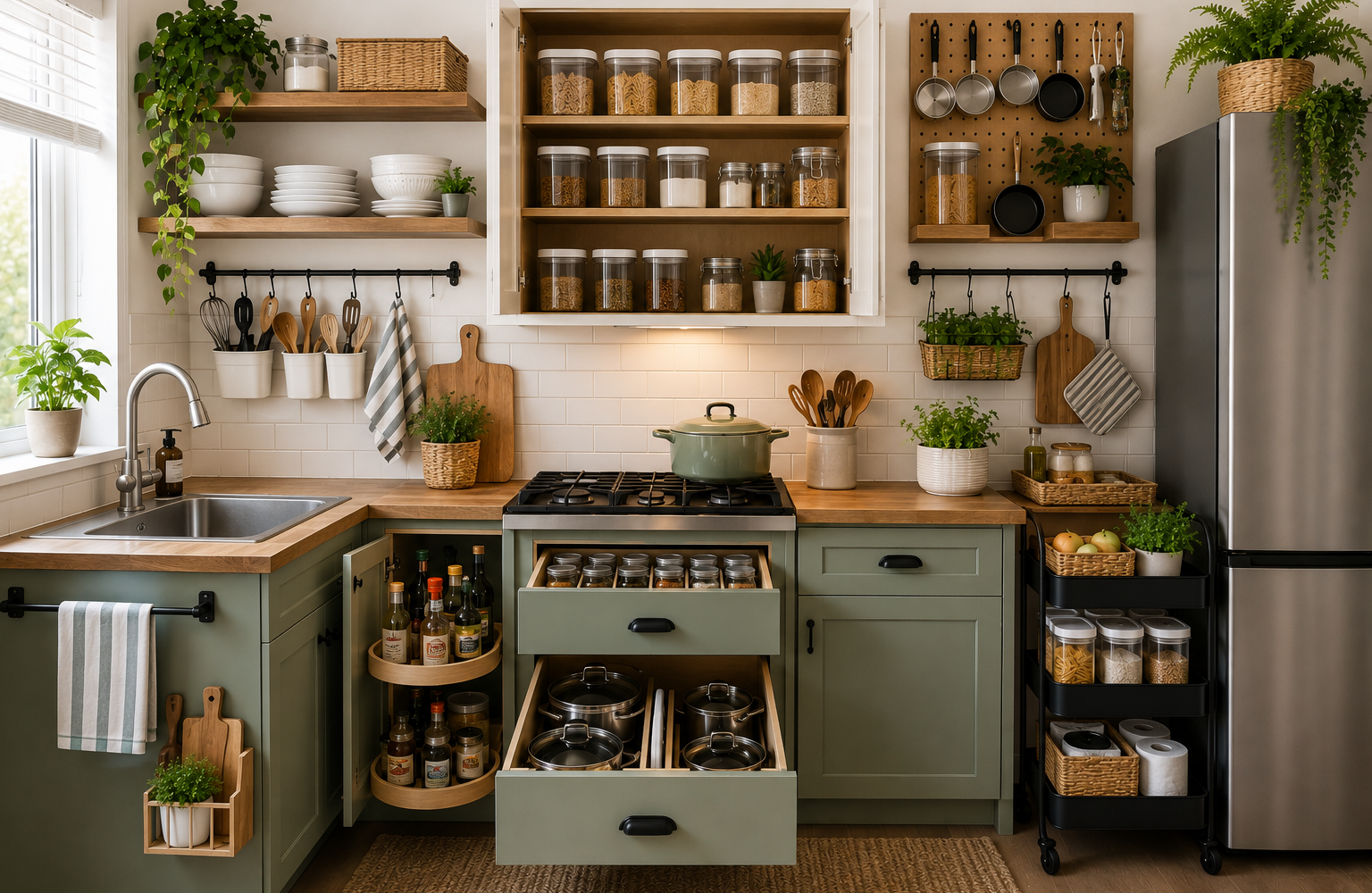
Learning how to organize a small kitchen is less about buying more storage products and more about using the space you already have effectively. When counter space, cabinets, and drawers are limited, every item needs a practical place.
A small kitchen can still be easy to cook in and maintain. The goal is not to make every cabinet look perfect. The goal is to make everyday items easy to reach, reduce unnecessary clutter, and use overlooked storage space wisely.
1. How to Organize a Small Kitchen by Starting With Less
Before buying organizers, bins, or shelves, start by looking at what is already taking up space.
Remove items you rarely use, duplicates you do not need, damaged containers, expired pantry items, and appliances that have not been used in a long time.
This Old House also recommends beginning small-kitchen organization by decluttering and cleaning before trying to create additional storage.
A useful rule is simple:
Frequently used items deserve the easiest-to-reach spaces.
Items used occasionally can go higher up or farther back. Items you never use probably do not need valuable kitchen space at all.
2. Create Zones Based on How You Use the Kitchen
Instead of placing things wherever they fit, organize your kitchen around activities.
For example:
Cooking zone: pots, pans, cooking utensils, oils and seasonings
Food preparation zone: cutting boards, knives and mixing bowls
Coffee zone: coffee maker, mugs, coffee and filters
Cleaning zone: dish soap, brushes, cloths and cleaning supplies
Food storage zone: containers, wraps and reusable bags
This reduces unnecessary movement while cooking because related items stay together.
When deciding how to organize a small kitchen, think about where you actually use an item before deciding where to store it.
3. Keep Countertops as Clear as Possible
Counter space is especially valuable in a small kitchen.
If every appliance and container stays on the counter, you lose space for preparing food.
Keep frequently used appliances accessible, but question everything else.
A coffee maker used every morning probably deserves counter space. An appliance used once every few months may be better stored in a cabinet.
You can also group small everyday items on a tray or in a basket. This keeps them contained instead of allowing clutter to spread across the counter.
4. Use Vertical Cabinet Space
Kitchen cabinets often have unused space above shorter items.
Shelf risers can create an additional level for plates, bowls, mugs, canned food, or pantry items.
Stackable containers can also make better use of cabinet height.
The goal is not to stack everything as high as possible. You should still be able to see and reach what you need.
IKEA recommends adjustable shelves, shelf inserts, stackable containers, and pull-out storage as ways to use pantry and cabinet space more effectively.
5. Organize Drawers With Dividers
A drawer becomes inefficient when everything moves around every time it opens.
Dividers can create dedicated spaces for:
- Cutlery
- Cooking utensils
- Measuring tools
- Small gadgets
- Food storage accessories
- Kitchen towels
You do not necessarily need a complicated organizer.
Simple adjustable dividers can be useful because you can change the layout as your needs change.
Before buying one, measure the inside of the drawer carefully. An organizer that wastes several inches of space defeats the purpose.
6. Make Deep Cabinets Easier to Access
Deep cabinets can hold a lot, but items often disappear at the back.
Instead of stacking products several rows deep, consider storage that allows you to bring items forward.
Useful options include:
- Pull-out baskets
- Sliding trays
- Turntables
- Removable bins
- Drawer-style organizers
A turntable can work particularly well for sauces, oils, condiments, and small jars because you can rotate items from the back toward you.
Removable bins can also help. Instead of reaching behind several products, you can pull out the entire category.
7. Group Similar Pantry Items Together
Learning how to organize a small kitchen becomes much easier when pantry items have clear categories.
For example:
Breakfast
Baking
Pasta and grains
Snacks
Canned food
Sauces and condiments
Coffee and tea
Grouping similar products makes it easier to see what you already have before buying more.
Transparent containers and open bins can also help you see supplies quickly. IKEA recommends clear containers and grouped baskets as practical ways to keep pantry contents visible and accessible.
You do not need to transfer every grocery item into a matching container. Use containers when they genuinely improve storage or visibility.
8. Use Cabinet Doors Carefully
The inside of a cabinet door can provide useful storage without taking up shelf space.
Depending on the cabinet, you might use it for:
- Measuring spoons
- Lightweight cleaning accessories
- Small wraps or bags
- Pot lids
- Frequently used small tools
However, do not overload cabinet doors.
Check that organizers do not interfere with shelves or prevent the door from closing properly.
For renters, removable or over-the-door solutions may be preferable to permanent installation.
9. Use Walls and Other Overlooked Spaces
Small kitchens often have more usable vertical space than they first appear to have.
Depending on your layout, wall-mounted storage can hold:
- Cooking utensils
- Towels
- Lightweight cookware
- Spices
- Frequently used kitchen tools
The side of a cabinet or refrigerator area may also provide storage opportunities.
The key is restraint.
Using every wall for storage can make a small kitchen feel visually crowded. Add vertical storage where it solves a specific problem rather than covering every available surface.
10. Make Corner Space Work Harder
Corner cabinets can be difficult because items at the back are hard to reach.
Rotating organizers can make some corner spaces more accessible.
Another approach is to store less frequently used items toward the back and everyday items closer to the front.
Avoid using valuable corner space as a place where forgotten products accumulate.
If you regularly need to remove five things to reach one item, the storage system probably needs improvement.
11. Choose Storage Products Based on Measurements
One of the easiest mistakes is buying organizers before measuring the space.
Before purchasing bins, shelf risers, drawer organizers, or racks, measure:
Width
Depth
Height
Also measure cabinet openings. An organizer can technically fit inside a cabinet but still be difficult to insert or remove.
Write down the measurements before shopping.
This simple step can prevent you from buying storage products that create more problems than they solve.
12. Be Careful When Organizing Food
Organization should never interfere with proper food storage.
Perishable foods need appropriate refrigeration, and raw meat, poultry, and seafood should be stored securely to reduce the risk of juices contaminating other foods.
The USDA recommends keeping refrigerators at 40°F (4.4°C) or below and storing raw meat, poultry, and seafood securely to prevent cross-contamination.
For more detailed food-safety guidance, see the USDA food safety basics.
A kitchen should be organized for convenience, but food safety comes first.
13. Avoid Buying Organizers Just Because They Look Good
A beautiful storage product is not automatically useful.
Before buying an organizer, ask:
What problem does this solve?
If you cannot answer that clearly, you probably do not need it.
Storage products should make something easier to reach, create usable space, reduce clutter, or keep related items together.
This principle will become especially important later when The Home Utility begins recommending organization products.
We should recommend products because they solve a real storage problem, not simply because they look attractive.
14. Build a System You Can Maintain
The best organization system is one that stays organized after normal everyday use.
If putting something away requires removing several containers, opening multiple boxes, or following an overly complicated system, people are less likely to maintain it.
Keep frequently used items easy to return to their place.
Labels can help when several people use the kitchen, especially for pantry categories and storage bins.
The goal is not a picture-perfect kitchen.
The goal is a kitchen where you can quickly find what you need and easily put it back.
Small Kitchen Organization Checklist
Before buying additional storage, ask yourself:
Have I removed things I no longer use?
Are frequently used items easy to reach?
Are my countertops unnecessarily crowded?
Am I using the vertical space inside cabinets?
Could drawer dividers improve messy drawers?
Are items getting lost in deep cabinets?
Are similar pantry items grouped together?
Is there useful space inside cabinet doors?
Could a wall or cabinet side provide useful storage?
Have I measured before buying organizers?
Does each storage product solve a real problem?
Can everyone in the home easily maintain the system?
If you can answer those questions, you are already well on your way to creating a more functional kitchen.
The Home Utility Take
The key to how to organize a small kitchen is not squeezing as many things as possible into every cabinet.
It is making the space easier to use.
Start by removing unnecessary items. Give frequently used products the best locations. Use vertical and overlooked spaces intelligently, group related items together, and only buy organizers that solve a specific problem.
A small kitchen does not need more stuff.
It needs better use of the space it already has.