How to Choose a Cordless Vacuum: A Simple Buying Guide
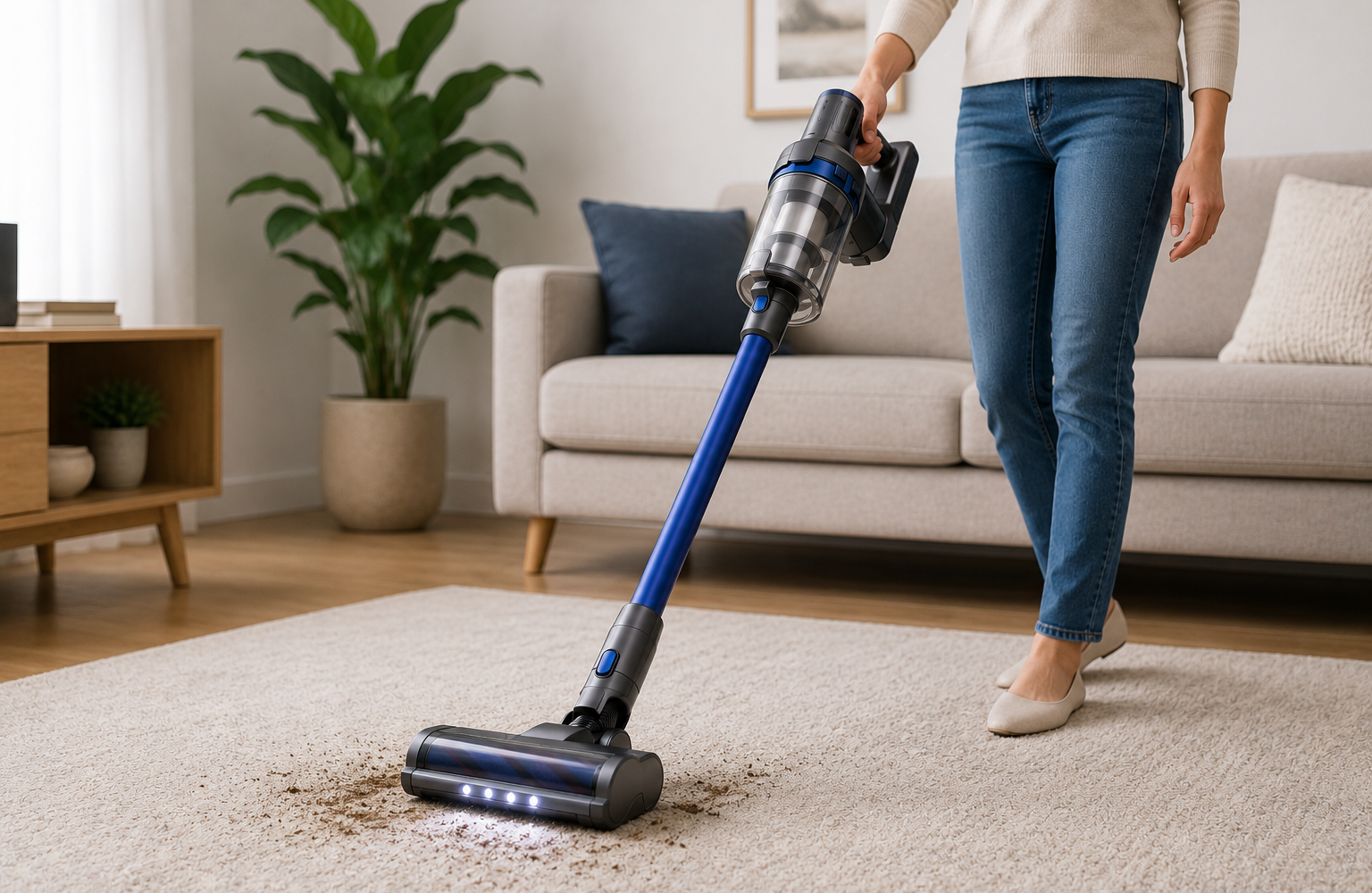
Learning how to choose a cordless vacuum starts with understanding your home and the way you clean it. Flooring, battery life, weight, filtration, pets, and storage can all affect which vacuum makes the most sense for you.
A small apartment with hard floors has very different cleaning needs from a larger home with carpets, stairs, and pets. Instead of choosing based on brand or price alone, focus on the features that will actually make everyday cleaning easier.
1. How to Choose a Cordless Vacuum for Your Flooring
When learning how to choose a cordless vacuum, start with the surfaces you clean most often.
For homes with mostly hard flooring, look for a vacuum that can collect fine dust and larger debris without scattering it. The design of the cleaning head can make a significant difference.
For carpeted homes, a powered brush roll can help lift dirt, hair, and debris from carpet fibres.
If you have both carpet and hard flooring, look for a vacuum that transitions easily between surfaces. Some models provide different cleaning heads or automatically adjust their cleaning mode.
Your flooring should be one of the first things you consider before comparing individual models.
2. Look Beyond Advertised Battery Runtime
Battery life is one of the biggest selling points for cordless vacuums, but advertised maximum runtime does not always represent everyday use.
A manufacturer might advertise a long runtime based on a lower power setting. Using maximum suction or a motorized cleaning head can reduce how long the battery lasts.
Think about how long you normally vacuum.
For a small apartment, you may only need enough battery for a quick cleaning session. A larger home may benefit from longer runtime or a vacuum with a removable battery.
Also check the charging time. A long-lasting battery is more convenient when it can be recharged within a reasonable amount of time.
3. Consider Real Cleaning Performance
Strong suction is useful, but suction alone does not determine how well a cordless vacuum cleans.
The cleaning head, brush roll, airflow, floor type, and overall design can all affect performance.
Think about the debris you regularly encounter.
Fine dust on hard flooring presents a different challenge from pet hair embedded in carpet. Crumbs and larger debris can also behave differently depending on the cleaning head.
When possible, look beyond manufacturer marketing claims and consider independent cleaning tests and long-term owner experiences.
4. Pay Attention to Weight and Maneuverability
Cordless vacuums are designed for convenience, but some models can become uncomfortable during longer cleaning sessions.
Much of the weight is often concentrated around the handle because the motor, battery, and dustbin are located near your hand.
Weight becomes particularly important if you:
- Clean stairs
- Vacuum multiple floors
- Clean above-floor surfaces
- Use handheld attachments frequently
- Vacuum for longer periods
Also consider maneuverability. A cleaning head that turns easily around furniture can make everyday cleaning considerably more convenient.
The most powerful vacuum is not necessarily the best choice if you dislike carrying or using it.
5. Check the Dustbin Size
Cordless vacuums generally have smaller dustbins than traditional upright or canister vacuums.
A smaller dustbin may be perfectly adequate for an apartment or quick everyday cleaning. Larger homes and households with pets may require more frequent emptying.
Pay attention to how the dustbin empties as well.
Ideally, you should be able to release debris directly into a garbage bin without having to reach inside the container.
A simple dustbin design can make regular maintenance much easier.
6. Consider Pet Hair Performance
If you have pets, do not choose a vacuum simply because the packaging says “pet.”
Hair can become wrapped around traditional brush rolls, especially when cleaning carpets and rugs.
Some cordless vacuums use brush designs intended to reduce hair tangling. Specialized motorized attachments can also help remove hair from sofas, stairs, car seats, and other fabric surfaces.
Pet owners should consider:
- Carpet performance
- Brush roll design
- Hair resistance
- Upholstery attachments
- Dustbin capacity
- Filtration
These features are generally more meaningful than a pet label on the product name.
7. Look at the Filtration System
A vacuum collects dust and debris, but filtration determines how well fine particles are contained as air moves through the machine.
Some cordless vacuums use HEPA filters or other high-efficiency filtration systems.
The U.S. Environmental Protection Agency explains that HEPA filters can theoretically remove at least 99.97% of airborne particles measuring 0.3 microns when the filter meets the HEPA standard. You can read the EPA’s explanation of HEPA filters for more information.
However, the filter is only one part of the vacuum. The overall design and sealing of the system also matter.
Check whether filters are washable or require replacement. If replacements are required, consider their availability and cost before purchasing.
8. Choose Attachments You Will Actually Use
A large accessory collection can look impressive, but more attachments do not automatically make a cordless vacuum more useful.
Common accessories include:
- Crevice tools
- Dusting brushes
- Upholstery tools
- Motorized pet tools
- Extension attachments
- Specialized floor heads
Think about your home.
A crevice tool may be useful for cleaning along baseboards and between furniture. An upholstery tool can be valuable if you regularly clean sofas or chairs. A motorized mini tool can be useful for pet hair.
Pay for attachments that solve actual cleaning problems rather than accessories that will remain in storage.
9. Think About Storage and Charging
A cordless vacuum needs somewhere to live when you are not using it.
Some models use wall-mounted charging docks. Others include freestanding docks or connect directly to a charging cable.
Before buying, decide where you would store the vacuum.
If you rent your home, you may prefer a storage system that does not require drilling into a wall.
Also check whether the battery can be charged separately from the vacuum. This can give you more flexibility when choosing where to store and charge it.
10. Check Whether the Battery Is Replaceable
Rechargeable batteries gradually lose capacity as they age.
A replaceable battery can potentially extend the useful life of a cordless vacuum because you may be able to replace the battery instead of replacing the entire machine.
Some manufacturers also offer additional batteries.
For larger homes, having two charged batteries can extend cleaning time without waiting for the vacuum to recharge.
Before purchasing, check:
- Whether the battery is removable
- Whether replacements are available
- Replacement battery cost
- Manufacturer warranty coverage
These factors can affect the long-term value of the vacuum.
11. Consider Maintenance and Replacement Parts
Cordless vacuums still require regular maintenance.
Depending on the model, you may need to:
- Empty and clean the dustbin
- Remove hair from the brush roll
- Wash or replace filters
- Check the cleaning head for blockages
- Clean attachments
- Replace worn components
Before purchasing, look at the manufacturer’s maintenance instructions.
It is also worth checking whether replacement filters, batteries, brush rolls, and other common parts are readily available.
A vacuum that is easy to maintain may remain useful for much longer.
12. Compare Value Instead of Price Alone
The most expensive cordless vacuum is not automatically the best choice for your home.
Likewise, the cheapest option may provide poor value if it cannot adequately clean your floors, has insufficient battery life, or becomes uncomfortable to use.
Compare the things that actually matter:
Cleaning performance + battery life + weight + filtration + maintenance + useful attachments + warranty + price
A smaller home with hard flooring may not require a premium model with maximum power and numerous accessories.
A larger home with carpets, pets, and stairs may justify spending more for stronger cleaning performance, better battery life, and useful attachments.
Cordless Vacuum Buying Checklist
Before buying, ask yourself:
What type of flooring do I have?
How large is the area I normally clean?
How much battery runtime do I realistically need?
Is the vacuum comfortable to carry and maneuver?
Do I need strong pet hair performance?
Is the dustbin large enough for my home?
What filtration system does it use?
Which attachments will I actually use?
Can the battery be replaced?
Where will I store and charge it?
Are replacement parts readily available?
What warranty does the manufacturer provide?
Answering these questions can make comparing different cordless vacuums much easier.
The Home Utility Take
Ultimately, how to choose a cordless vacuum comes down to matching the machine to your home, flooring, cleaning habits, and budget.
Start with your flooring and the amount of space you normally clean. Then consider battery life, weight, cleaning performance, filtration, maintenance, and the attachments you will genuinely use.
The best cordless vacuum is not necessarily the model with the highest price or longest list of features. It is the one that makes cleaning your particular home easier.