How to Choose the Right Air Fryer: A Simple Buying Guide
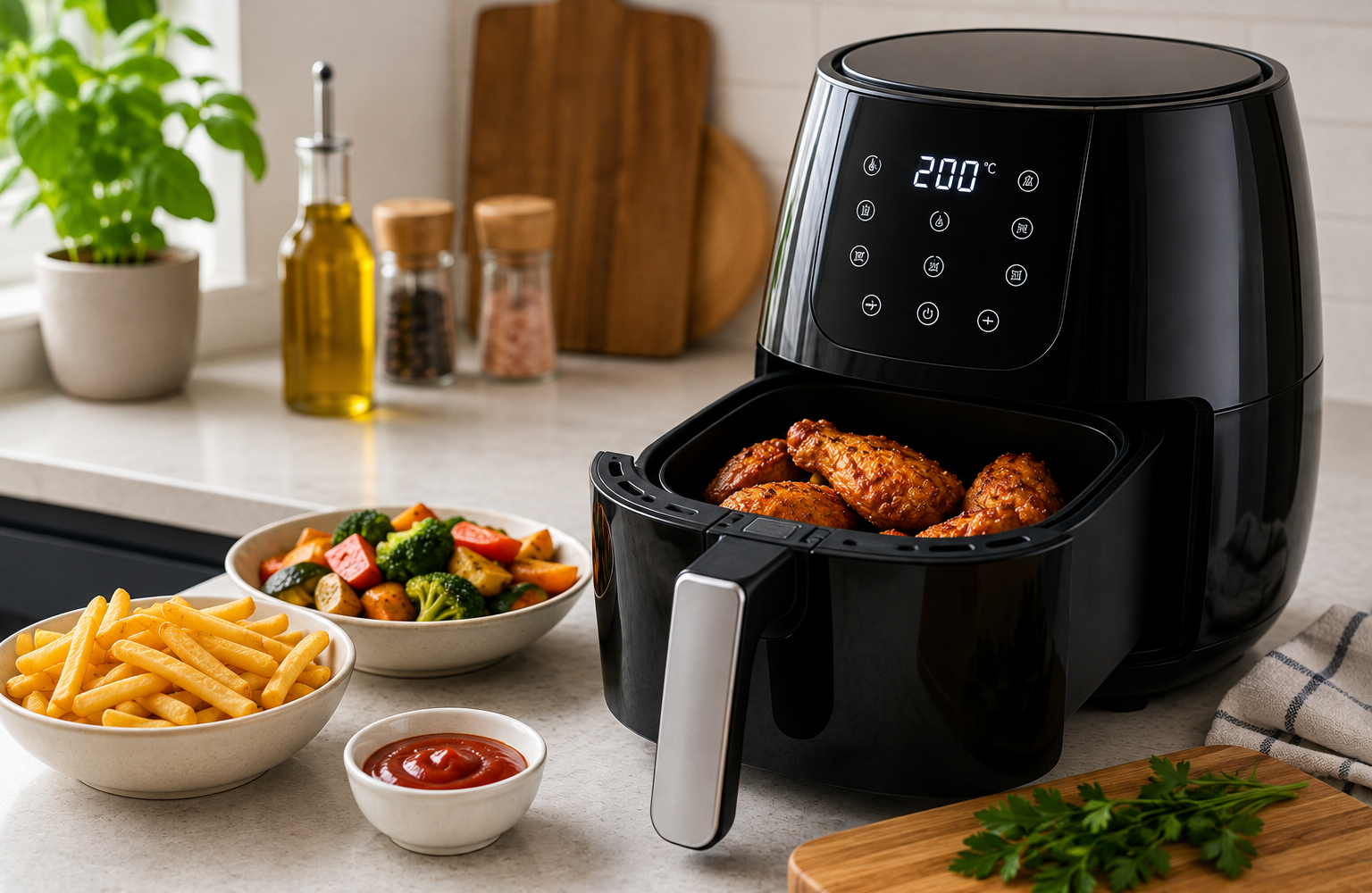
Air fryers come in many sizes and styles, but choosing one does not need to be complicated.
The right air fryer depends mainly on how much food you cook, how much counter space you have, and how you plan to use it.
Instead of focusing on brands first, consider the factors below. They will help you narrow down your options and choose an air fryer that actually fits your kitchen and cooking habits.
1. How to Choose an Air Fryer by Capacity and Size
Air fryer capacity is usually advertised in quarts or litres, but the capacity number does not tell you everything.
What matters more is how much food can actually fit inside the cooking basket without overcrowding it.
A wide basket can sometimes be more useful than a deep basket because it gives you more surface area to spread food out.
Think about what you normally cook and how many people you usually cook for.
If you mainly prepare snacks or small meals for one or two people, you may not need a very large air fryer. If you regularly cook for a family or prepare larger portions, more cooking space can be useful.
2. Choose the Right Air Fryer Style
There are several common types of air fryers.
Single-Basket Air Fryers
These are among the simplest options. They have one cooking basket and work well for everyday meals, snacks, vegetables, and reheating food.
They can also be a good choice when countertop space is limited.
Dual-Basket Air Fryers
Dual-basket models have two separate cooking areas.
They can be useful if you regularly prepare two different foods at the same time. Some models allow each basket to use a different temperature or cooking time.
The tradeoff is that dual-basket models are often wider and require more countertop space.
Oven-Style Air Fryers
These resemble small countertop ovens and often provide additional cooking functions such as baking, roasting, broiling, and toasting.
They may provide more usable cooking space, but they can also take up considerably more room.
Choose the style based on how you actually cook rather than simply choosing the model with the most features.
3. Measure Your Counter Space
Before buying an air fryer, check its dimensions.
Look at the:
- Width
- Depth
- Height
Then compare those measurements with the space available in your kitchen.
You should also follow the manufacturer’s instructions regarding clearance around the appliance during use.
This is especially important in smaller kitchens. A large appliance that constantly needs to be moved in and out of storage may become inconvenient.
4. Pay Attention to Basket Shape
Capacity is important, but basket shape matters too.
Air fryers rely on hot air circulating around the food. Giving food enough room can help it cook more evenly.
A wider cooking surface may allow you to spread food into a single layer instead of stacking pieces on top of each other.
When comparing two similarly sized air fryers, look at the actual shape and usable cooking area of the basket, not only the advertised capacity.
5. Check the Power
Air fryers use powerful heating elements and fans to circulate hot air around food.
Wattage varies between models, and more powerful appliances may heat quickly or recover temperature faster after food is added.
However, higher wattage does not automatically mean better performance.
Consider power together with:
- Basket size
- Cooking performance
- Appliance size
- Electrical requirements
- Energy use
Always check the manufacturer’s electrical requirements before using an appliance in your home.
6. Look for Features You Will Actually Use
Modern air fryers can include many additional features.
Common examples include:
- Digital controls
- Cooking presets
- Dual cooking zones
- Viewing windows
- Reheat modes
- Roast settings
- Bake settings
- Dehydrate functions
- Shake reminders
- Synchronized cooking
Some of these can be genuinely useful.
For example, synchronized cooking can help when preparing two foods that require different cooking times. A viewing window can make it easier to check food without opening the basket repeatedly.
But more features do not automatically make an air fryer better.
Focus on features that solve a real problem in your cooking routine.
7. Think About Cleaning
Cleaning is easy to overlook when shopping for an air fryer.
An appliance that is difficult to clean may eventually become one you avoid using.
Check whether the basket and removable cooking tray are easy to remove. If dishwasher cleaning matters to you, verify whether the manufacturer lists those components as dishwasher-safe.
Also look at the shape of the basket and tray. Simple designs with fewer hard-to-reach areas can make regular cleaning easier.
8. Consider Safety and Build Quality
Air fryers produce significant heat, so basic design and safety features matter.
Look for things such as:
- Stable feet
- Secure handles
- Clear controls
- A sturdy cooking basket
- Easy-to-follow safety instructions
Place the air fryer on an appropriate heat-resistant surface and follow the manufacturer’s instructions regarding ventilation and clearance.
Allow the appliance to cool before cleaning or storing it.
9. Do Not Choose Based on Price Alone
The most expensive air fryer is not automatically the best choice for your home.
At the same time, the cheapest option may not offer good value if it is too small, difficult to clean, poorly suited to your needs, or missing features you would regularly use.
Instead of looking only at price, compare:
Cooking space + performance + cleaning + useful features + warranty + price
The goal is not necessarily to find the cheapest air fryer. It is to find one that provides good value for the way you intend to use it.
Quick Air Fryer Buying Checklist
Before buying an air fryer, ask yourself:
How many people am I usually cooking for?
What foods will I cook most often?
How much counter space do I have?
Do I want one cooking basket or two?
Is the basket large enough for the portions I normally prepare?
Is it easy to clean?
Which extra features will I actually use?
What warranty does the manufacturer provide?
Answering these questions can make comparing different air fryers much easier.
The Home Utility Take
There is no single air fryer that is right for every kitchen.
Instead of starting with “What is the best air fryer?”, start with:
“What type of air fryer fits the way I cook?”
Determine your preferred size, basket style, and available countertop space first. Then compare performance, cleaning, features, warranty, and price.
A simpler model that fits your everyday routine may be a better purchase than a more expensive appliance filled with features you rarely use.